One enormous spot the morning of a party is bad enough. But what happens when the spots keep coming back?
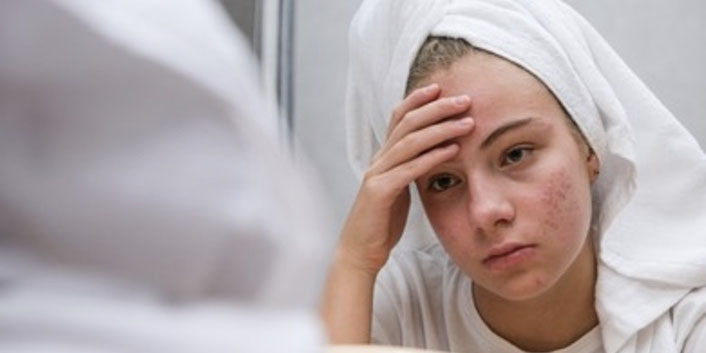
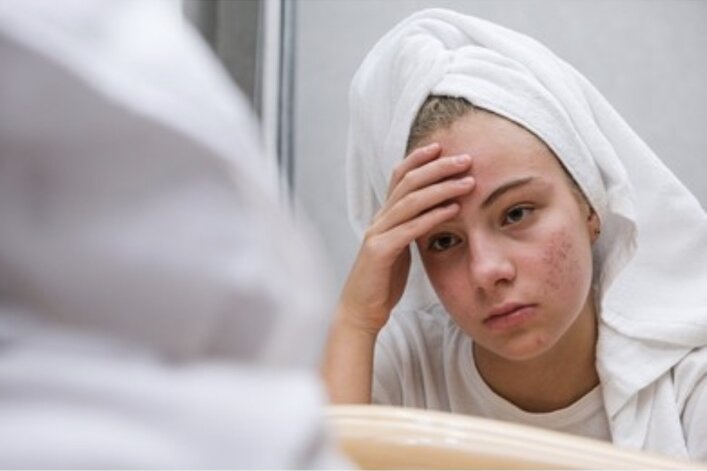
You spot a pimple on your chin. By Friday, another one has appeared on your forehead. Suddenly, you’re searching for miracle spot treatments and wondering whether you actually have acne.
Before you order half the skincare aisle, it helps to know what you’re dealing with.
Because there’s a difference between having the occasional breakout and living with an ongoing skin condition. And understanding that difference can save you a lot of money, confusion and unnecessary skincare experiments.
First, let’s get the difference straight
A spot is something you can get as part of acne. So they’re not entirely separate things.
But one annoying pimple doesn’t automatically mean you have persistent acne.
An occasional spot might appear around your period, during a stressful week or completely unexpectedly. It may be red, slightly sore or have a white centre.
Breakout-prone skin is a little different. Perhaps small bumps regularly appear across your forehead, your chin breaks out from time to time or certain skincare products seem to upset your skin. You can have breakout-prone skin even if your complexion is dry or combination rather than oily.
Acne is a skin condition caused by a combination of blocked hair follicles, oil production and inflammation. It can be mild, moderate or severe, and it may involve blackheads, whiteheads, inflamed pimples or painful lumps deeper beneath the skin.
Importantly, acne doesn’t always mean having dozens of spots. A smaller number of persistent lesions can still be acne.
Meet the different types of spots
Not every spot looks or behaves the same way. All five types pictured below can occur in acne, but they don’t all need the same treatment.
Blackheads
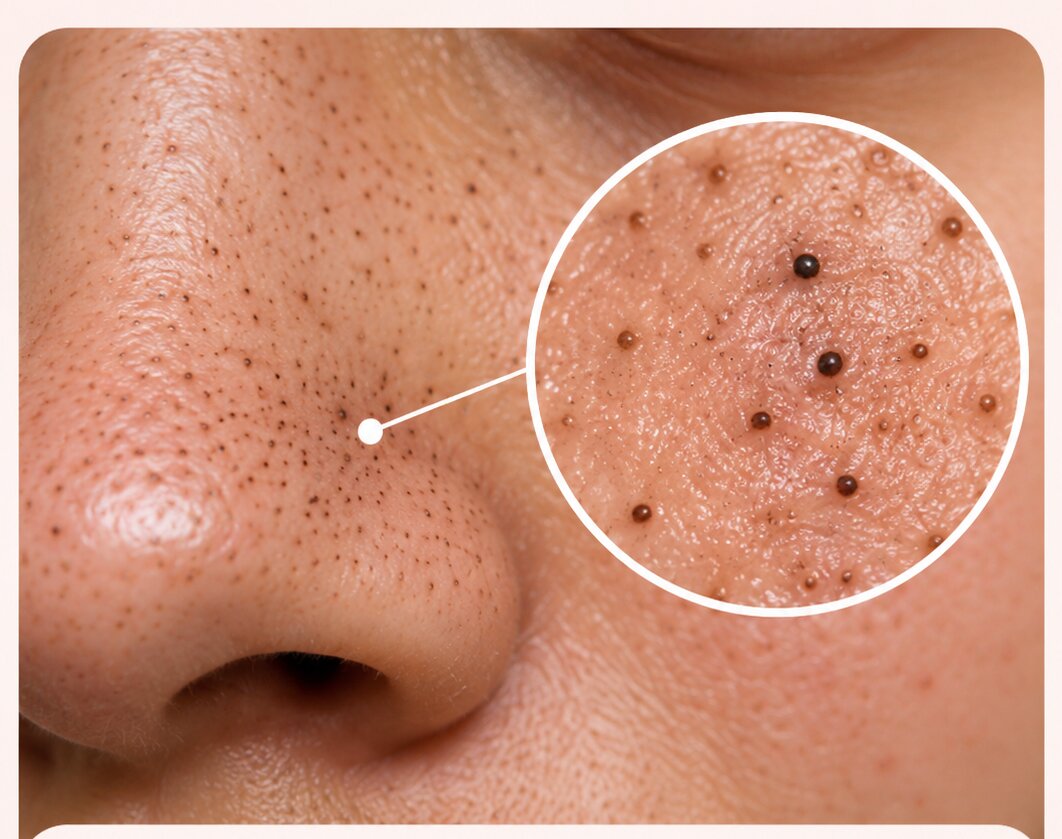
Those little dark dots often found around your nose, forehead and chin. Despite their appearance, they aren’t filled with dirt. Their colour develops when material inside the pore is exposed to air.
Whiteheads
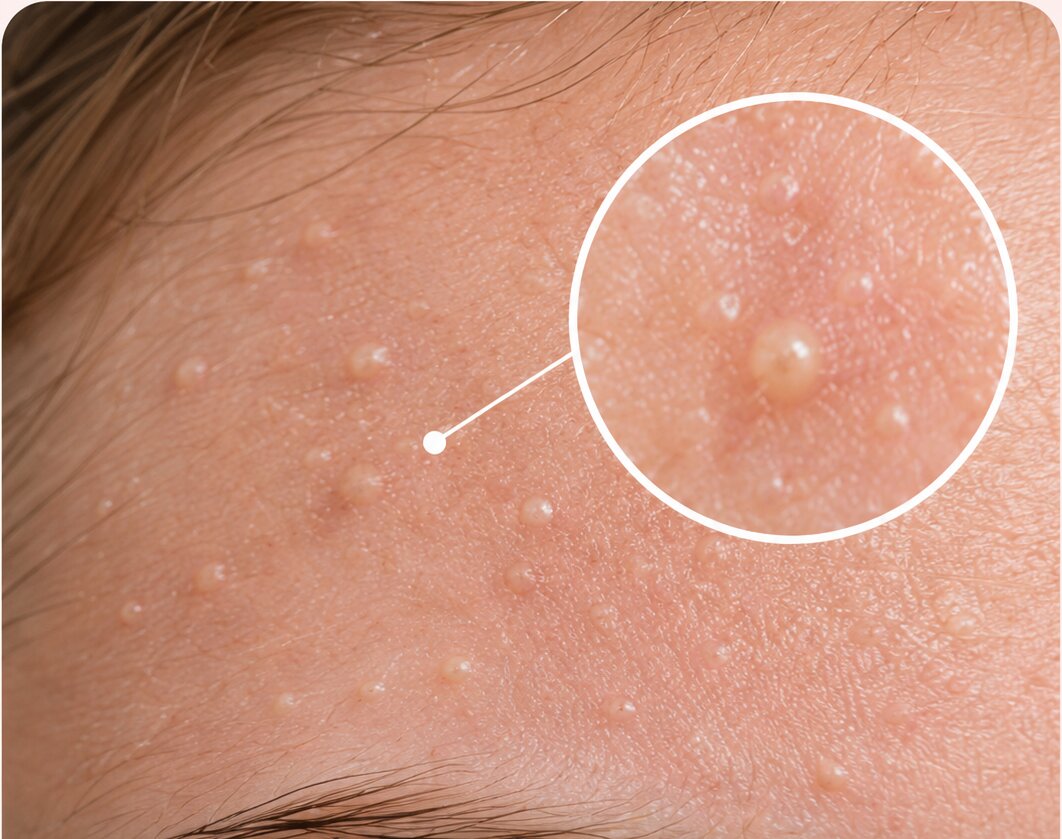
Small, closed bumps caused by blocked pores. They’re a form of non-inflammatory acne and don’t necessarily need squeezing or aggressive exfoliation.
Papules
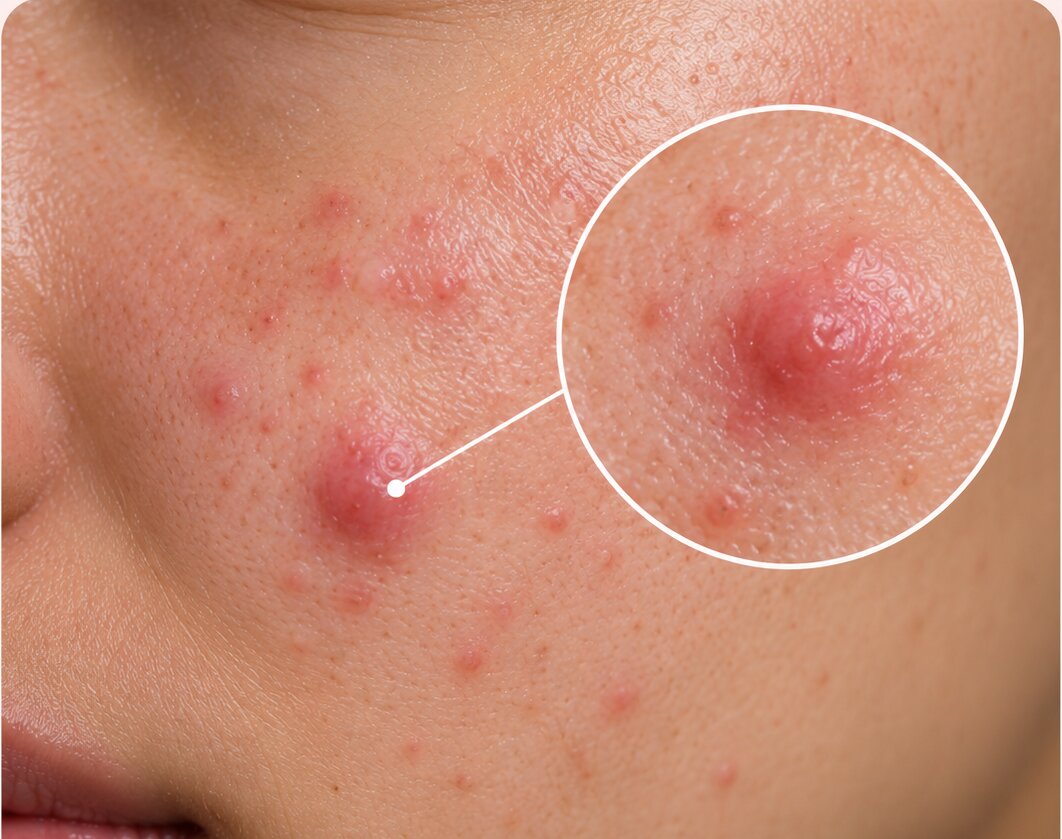
Inflamed, often tender bumps that may appear red, pink or darker than your natural skin colour. They don’t have a visible pus-filled head.
Pustules
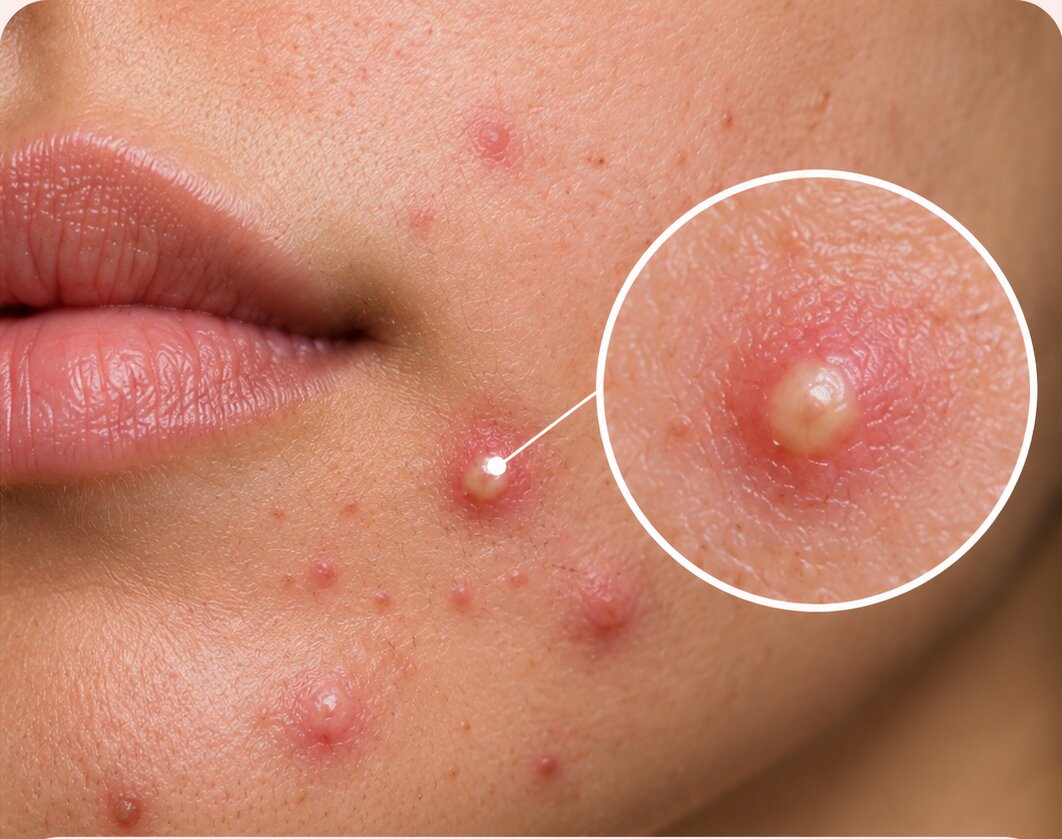
Inflamed spots with a white or yellow centre containing pus. These are the classic angry-looking pimples that can be so tempting to squeeze.
Nodules and cysts
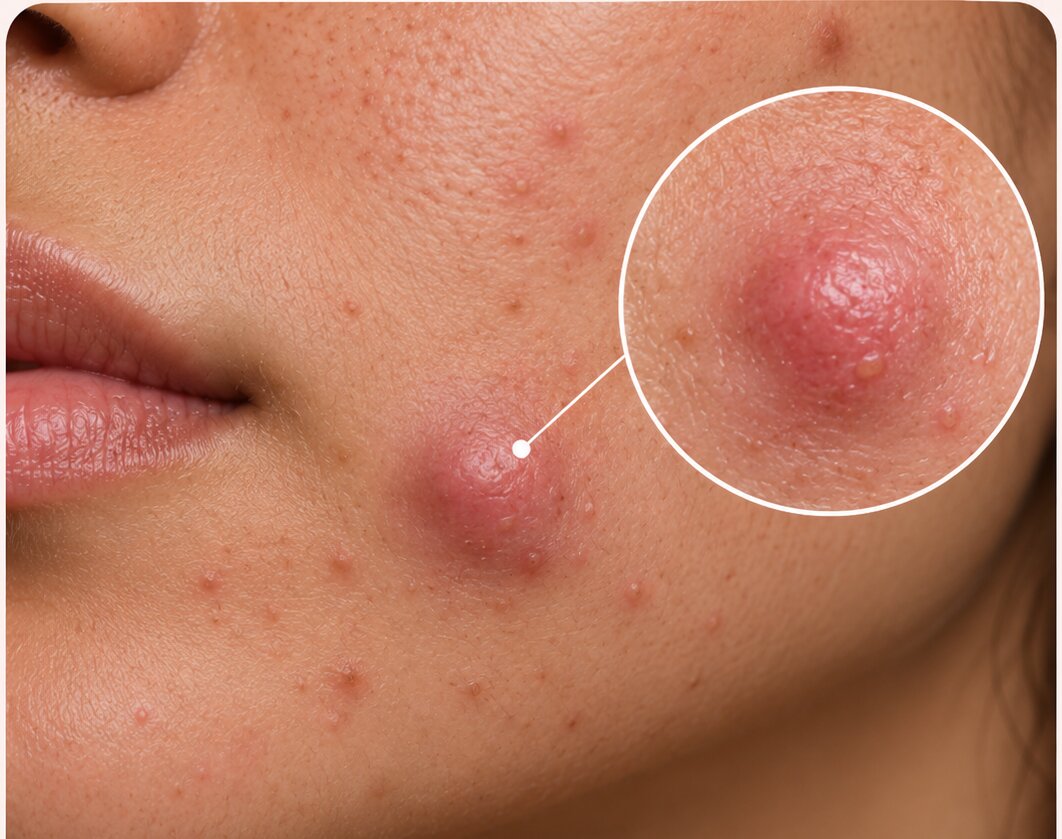
Deeper, larger and often painful acne lesions, with a higher chance of leaving scars. They can feel like uncomfortable lumps beneath the skin rather than ordinary surface spots.
The important bit: Blackheads and whiteheads are generally non-inflammatory acne. Papules and pustules are inflammatory acne. Nodules and cysts are deeper, more serious lesions.
Deep, painful lumps are a reason to make a GP appointment, not an invitation to start squeezing.
Illustrative images showing the appearance of different blemishes. Real spots can look different across skin tones, and photographs alone cannot diagnose acne.
Why does teenage skin break out?
Hormones have a lot to answer for.
During puberty, hormonal changes can encourage your skin to produce more oil. When that oil mixes with dead skin cells, pores can become blocked, contributing to acne.
You might also notice more spots around your period, particularly near your chin or jawline.
Stress can aggravate acne, while friction from tight clothes, certain hair products and unsuitable skincare can contribute to breakouts.
One thing that doesn’t cause acne? Being dirty.
You cannot wash acne away by cleansing five times a day. All that excessive washing may do is leave your skin irritated.
What should you actually put on your skin?
You don’t need a bathroom overflowing with serums, exfoliants and spot treatments.
A gentle, consistent routine is a much better place to begin.
Your morning routine
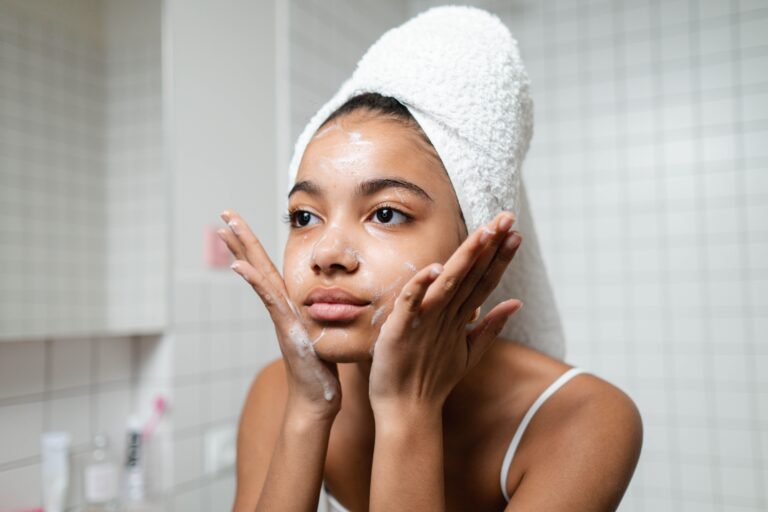
Cleanse gently, or rinse with water if that suits your skin. Follow with a lightweight, fragrance-free moisturiser and broad-spectrum SPF 30 or higher.
Your evening routine
Wash away the day’s sunscreen, makeup and build-up with a gentle cleanser.
If you’re using an appropriate acne treatment, apply it as directed, then moisturise.
You can build on that routine if your skin genuinely needs more. There’s no prize for using the greatest number of products.
Spot treatment or spot sticker?
Not every blemish needs an entire skincare overhaul.
For an occasional spot, a targeted treatment might be all you need. And if you’re someone who cannot resist picking at a pimple, a hydrocolloid patch could become your new best friend.
These patches absorb fluid from superficial spots and protect them from curious fingers. They’re not a cure for acne and won’t magically flatten a deep cyst overnight.
The Spot Patch Edit
Rhode Spotwear Pimple Patches
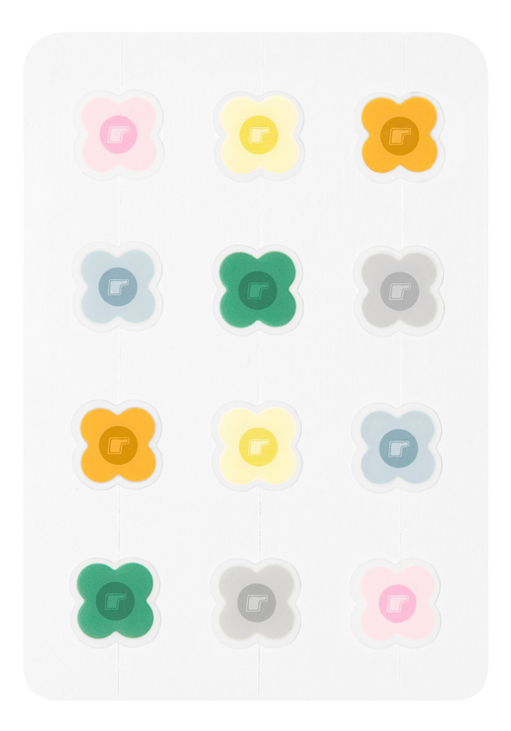
Who said spot patches had to be boring?
Rhode’s colourful hydrocolloid stickers come in playful designs, including strawberries, daisies and mushrooms. They’re designed to protect surface-level spots and absorb fluid.
Starface Hydro-Star Clear
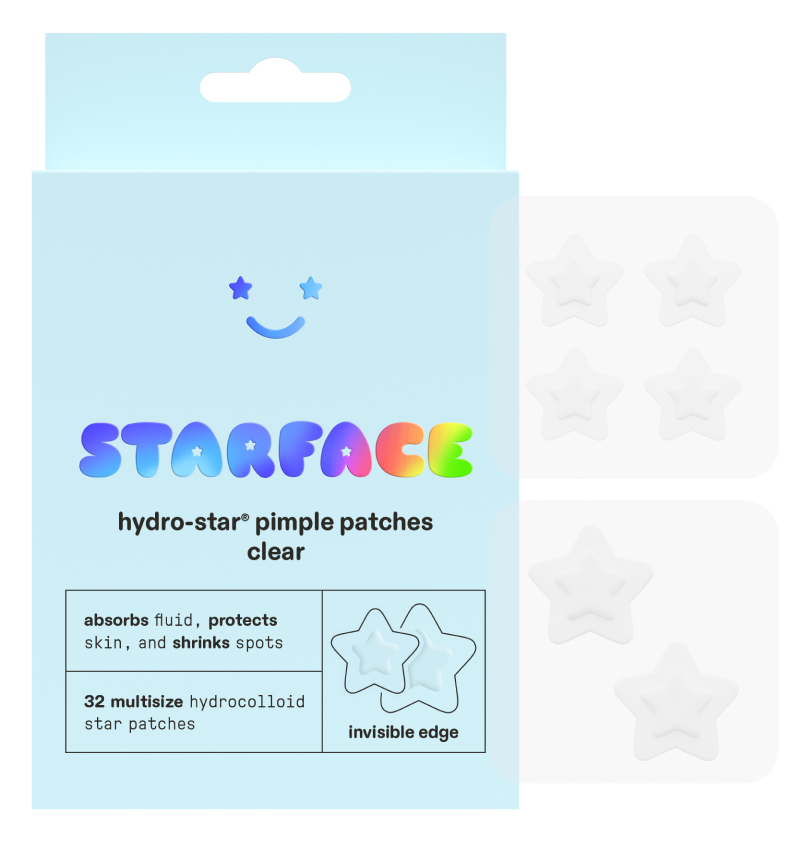
Want to cover a spot without making a statement?
These clear hydrocolloid stars come in two sizes and blend into the skin for a more discreet look. Ideal when you want something a little less noticeable.
Apply patches to clean, completely dry skin and follow the instructions on the packaging. They work best on superficial spots, particularly ones with visible fluid.
When a sticker isn’t enough
Sometimes a breakout needs more than a cute patch.
This is where understanding ingredients becomes useful. You don’t have to become a skincare scientist, but knowing a few basics makes choosing products much easier.
Treatments worth knowing about
The INKEY List Succinic Acid Treatment
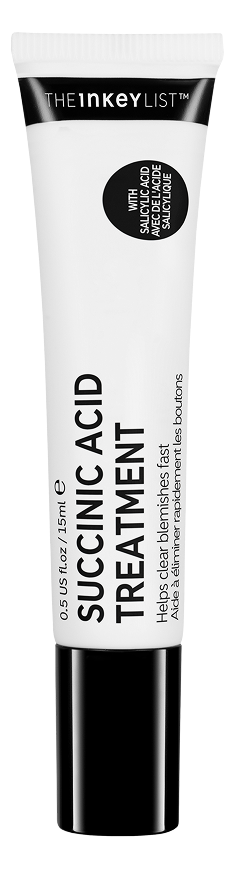
A targeted blemish treatment containing succinic acid, sulphur and salicylic acid.
Designed for individual breakouts rather than your entire face. The brand lists it as suitable for teenagers, but introduce it cautiously.
Acnecide Face 5% Gel
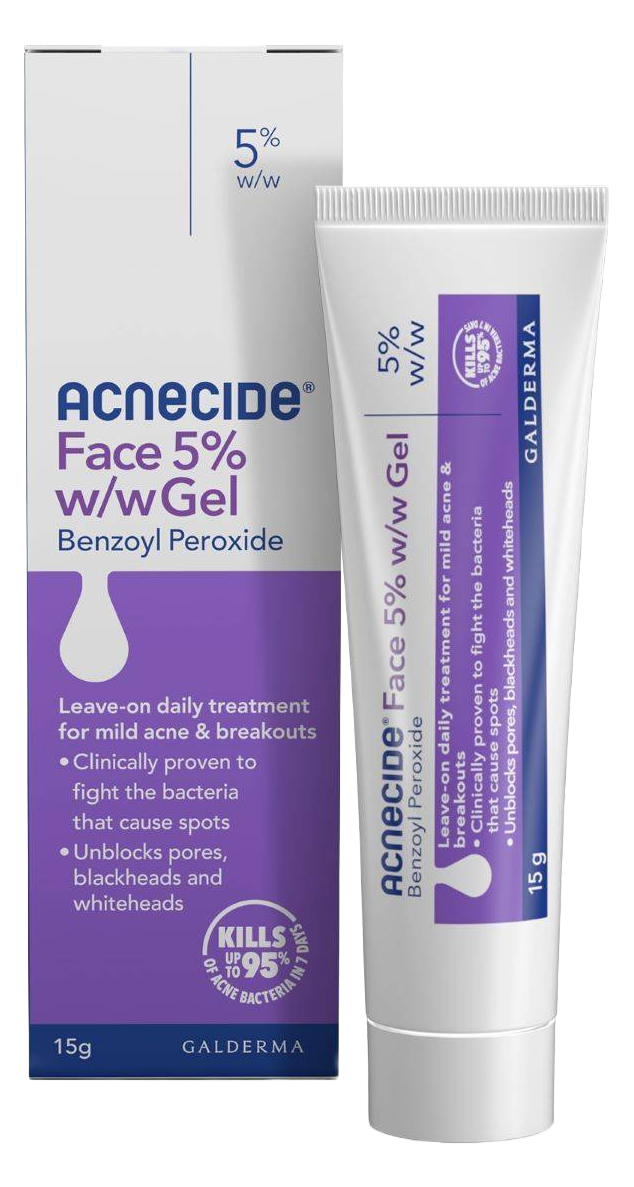
A proper pharmacy medicine containing benzoyl peroxide for mild facial acne, particularly blackheads and whiteheads.
Suitable from age 12 when appropriate. Follow the instructions and speak to a pharmacist before starting, especially if you’re already using another acne treatment.
La Roche-Posay Effaclar Duo+M
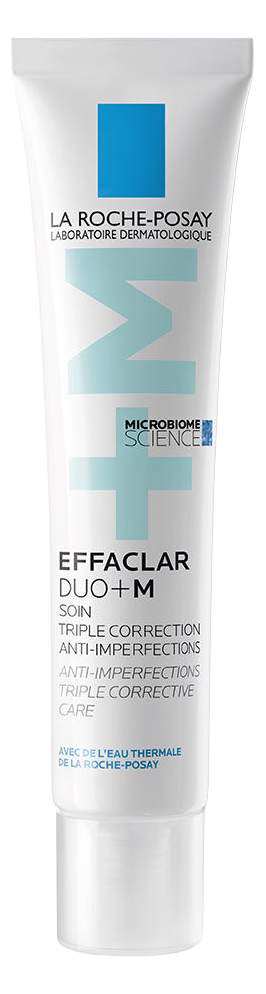
A blemish-focused skincare treatment designed to help with visible imperfections and marks.
A cosmetic option for blemish-prone skin rather than a substitute for prescription acne medication. Check that the formula is appropriate for your age and skin sensitivity.
These products aren’t all interchangeable. Acnecide is a medicine for acne; the other two are cosmetic blemish treatments. Acne that is deep, scarring, widespread or significantly inflamed needs professional advice rather than repeated experiments with products.
The ingredients worth understanding
Salicylic acid: Helps clear congestion inside pores, making it particularly useful for blackheads and whiteheads. Younger teens should seek advice before introducing exfoliating acids.
Benzoyl peroxide: An established acne medicine that helps reduce acne-related bacteria. It can cause dryness, peeling and irritation, and may bleach towels or pillowcases.
Niacinamide: Can support the skin barrier and may help manage excess oil, but isn’t a replacement for acne medicine.
Azelaic acid: Can help with acne and certain marks left behind. Ask a pharmacist or GP about appropriate options.
Prescription retinoids: Medicines such as adapalene can treat acne by helping prevent clogged pores. They’re quite different from buying cosmetic anti-ageing retinol serums, which teenagers generally don’t need.
And remember, using every active ingredient in your bathroom at once won’t make your skin improve more quickly.
Acne doesn’t stop at your jawline
Your face isn’t the only place breakouts can happen. Spots on your body are common too, especially during the teenage years.
Back acne: the dreaded ‘bacne’
Your shoulders and back can develop acne just like your face.
Sweating, friction from backpacks and tight exercise clothes may aggravate it.
Shower after exercise when possible, change out of sweaty clothes and use a mild body cleanser.
For persistent body acne, a pharmacist can advise whether a medicated body wash is suitable.
Acnecide 5% Wash Gel
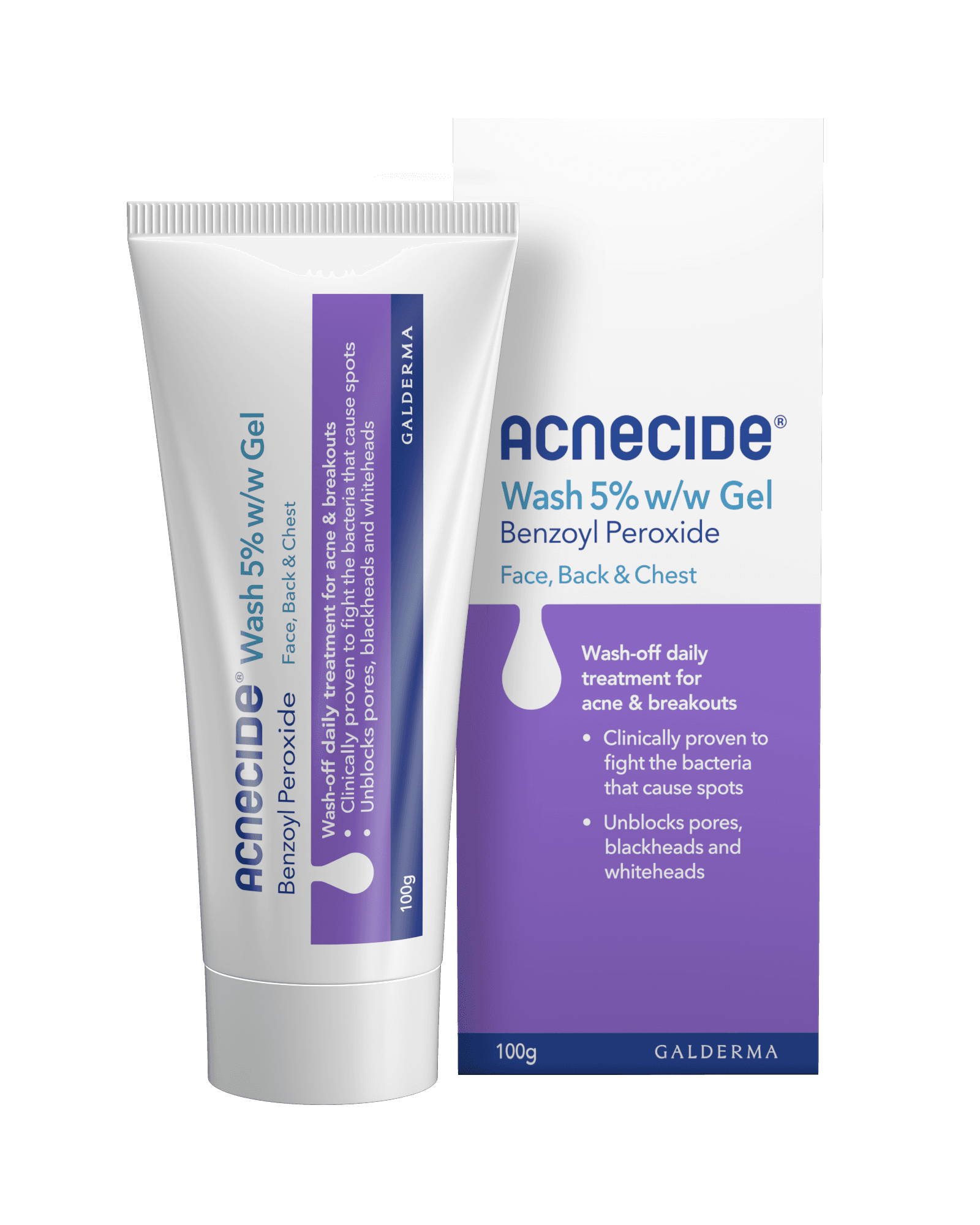
A wash-off benzoyl peroxide treatment for acne on the face, back and chest.
This is a pharmacy medicine, not an everyday scented shower gel. Ask a pharmacist whether it’s appropriate for you and follow the leaflet carefully. Under-18s should ask in store about purchasing.
Spots on your chest
Chest acne is another common problem.
Breathable clothing and gentle cleansing may help reduce irritation. It’s also worth considering whether heavily fragranced body products are upsetting your skin.
If spots are widespread, painful or causing scars, arrange a GP appointment.
What about spots on your bottom?
Here’s the interesting part: what looks like acne on your bottom might be something else.
Folliculitis happens when hair follicles become inflamed, sometimes because of friction, shaving or infection.
The little bumps can resemble pimples, but that doesn’t mean a facial acne treatment is the right answer.
Don’t pick them, choose breathable clothing and get advice from a pharmacist or GP if they’re painful, spreading or refusing to clear.
Spots around your hairline or scalp
Some hair oils, conditioners and heavier styling products may contribute to breakouts around your forehead and hairline.
Keep styling products away from your face where possible and rinse conditioner out thoroughly.
If you’re experiencing persistent, itchy or painful bumps on your scalp, they could be folliculitis or another skin condition. Have them checked rather than experimenting with acne treatments.
When is it time to see your GP?
You don’t have to live with painful or persistent acne while you work your way through every product in Boots.
It’s worth making an appointment when:
- Your breakouts keep returning and pharmacy treatments aren’t helping.
- You’re developing deep, painful nodules or cysts.
- Your skin is starting to scar or develop lasting marks.
- You have lots of inflamed spots across your chest, back or face.
- Your skin looks infected, swollen or feels unusually hot.
- Your spots are affecting your confidence, making you anxious or interfering with everyday life.
Your GP can help identify what sort of acne you have and whether you need prescription treatment.
That might involve medicated creams or gels, tablets where appropriate, or a referral to a dermatologist.
Even effective acne treatments don’t work overnight. You may see improvement after several weeks, but fuller results can take months.
If a pharmacy treatment hasn’t helped after around 12 weeks, speak to your pharmacist or GP about what to try next. For deep, painful or scarring acne, don’t wait that long.
Five things your skin would probably like you to stop doing
Washing your face constantly. For most people, twice-daily gentle cleansing is plenty. More washing can mean more irritation.
Squeezing every spot. Picking inflamed spots can worsen inflammation and increase the risk of marks and scarring.
Changing your routine every few days. Introduce products gradually. Otherwise, how will you know what’s helping and what’s causing irritation?
Avoiding moisturiser because you have oily skin. Oiliness doesn’t mean your skin doesn’t need moisture, particularly when you’re treating acne.
Believing that everyone else has flawless skin. Filters, lighting and edited photographs can make real skin look completely different. Pores, uneven texture and occasional spots are normal.
One last thing: your skin isn’t your personality
Acne can knock your confidence, particularly when you’re surrounded by photographs of apparently perfect complexions.
But having acne is incredibly common during adolescence. It says nothing about your hygiene or how well you look after yourself.
You don’t need the most expensive products or the longest skincare routine. You need to understand your skin, choose appropriate treatments and ask for professional help when you need it.
Whether that means simplifying your cleanser-and-moisturiser routine, getting advice at the pharmacy or visiting your GP, there are options.
Healthy skin doesn’t have to look flawless.