The products worth having, the ones you can skip and why less really can be more.
Walk into any beauty shop and you’ll find shelves packed with cleansers, toners, serums, exfoliators, face masks, moisturisers and eye creams.
Some promise glowing skin. Others claim to minimise pores, banish blemishes or transform your complexion overnight.
With so much choice, it’s easy to wonder whether you’re missing something important.
But here’s the good news: your teenage skin probably needs far less than you think.
Before you spend your money on another bottle of something you can’t quite pronounce, let’s work out what your skin actually needs, what it doesn’t and which skincare habits really make a difference.
First things first: your skin is doing its own thing
During your teenage years, hormones can make your skin oilier, drier, more sensitive or prone to spots.
You might have clear skin one week and wake up with three spots on your chin the next. Annoying? Absolutely. Normal? Also yes.
Your skin is still developing, and everyone’s skin behaves differently. What works for your best friend might not work for you.
And contrary to what some beauty advertising might suggest, you don’t need perfectly smooth, poreless skin.
Pores are supposed to be there. They’re not a design flaw.
The three skincare essentials
Good news for your bank balance. You only need a few basics to build a good skincare routine.
1. Cleanser: the one that gets everything off
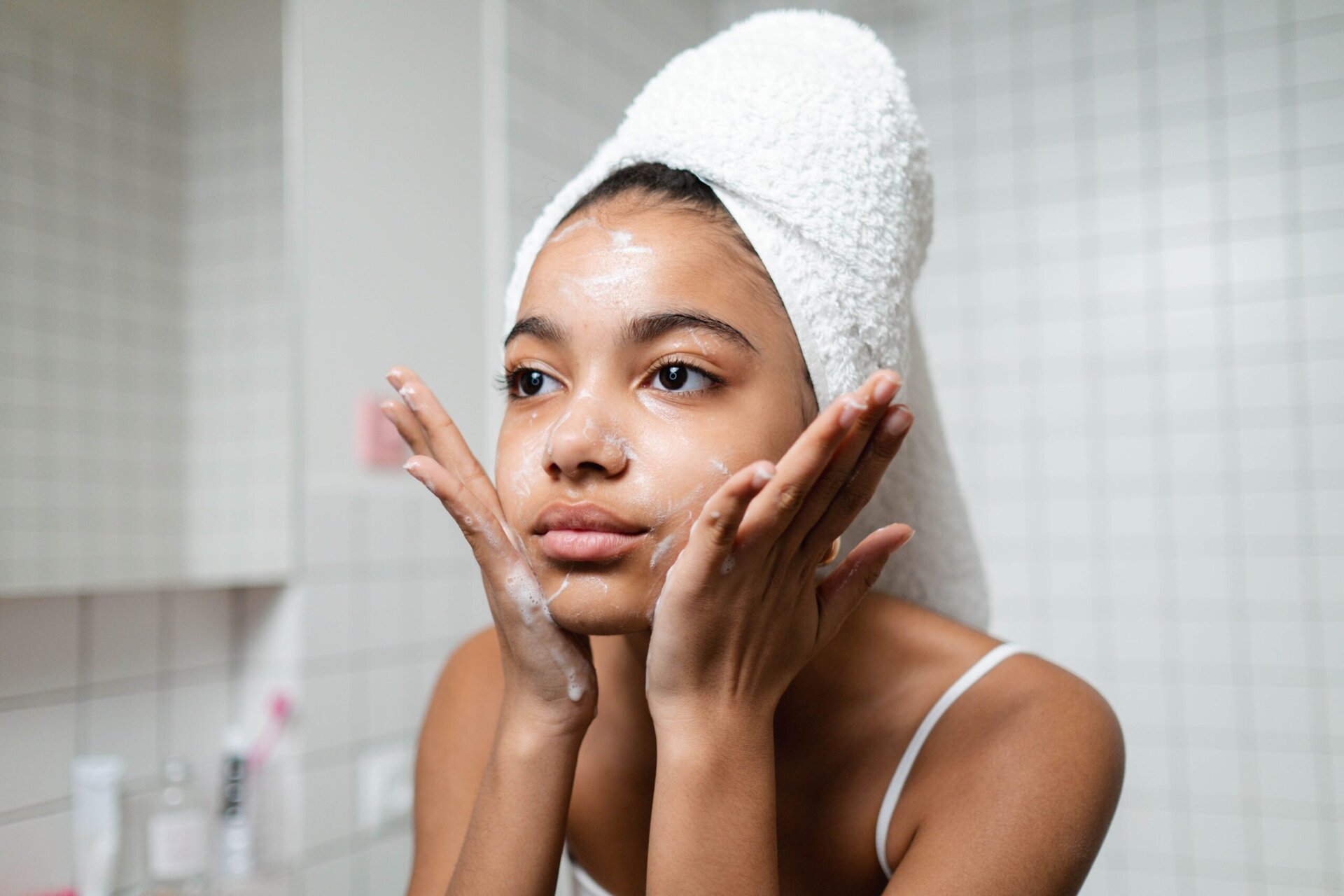
A gentle cleanser removes makeup, sunscreen, sweat and excess oil without leaving your face feeling tight or uncomfortable.
Look for something mild, preferably fragrance-free, that suits your skin type.
Wash your face in the evening and, depending on your skin, again in the morning. If your skin is dry or sensitive, a morning rinse with water may be enough.
And remember, clean doesn’t mean squeaky clean. If your face feels like it’s been washed with washing-up liquid, your cleanser might be too harsh.
2. Moisturiser: yes, even for oily skin
One of the biggest skincare myths is that oily skin doesn’t need moisturiser.
It does.
Moisturiser helps support your skin barrier, which is basically your skin’s built-in protective shield.
If you’ve got oily or spot-prone skin, look for a lightweight, non-comedogenic moisturiser. That simply means it’s formulated to be less likely to clog pores.
Dry skin? Something richer might suit you better.
And you definitely don’t need to spend £50 on a tiny pot.
3. SPF: your future skin will thank you
If there’s one skincare habit worth starting young, it’s protecting your skin from the sun.
UV rays can damage your skin even when the weather isn’t particularly warm.
Choose a broad-spectrum sunscreen with SPF 30 or higher and at least four-star UVA protection.
In the UK, sun protection is particularly important when the UV index is 3 or above. Apply sunscreen generously to exposed skin and reapply every two hours when outdoors, as well as after swimming or sweating.
Remember, sunscreen works alongside shade, sunglasses and protective clothing, not instead of them.
And no, a moisturiser with SPF 15 isn’t enough for a day at the beach.
The skincare products you probably DON’T need
This is where things get interesting.
Because while beauty brands would quite happily sell you 15 different products, your skin might be better off without most of them.
Harsh facial scrubs
Those gritty scrubs that feel like you’re sanding your face? Give them a miss.
Aggressive scrubbing can irritate your skin, especially if you’re already dealing with spots or sensitivity.
Your face isn’t a baking tray. It doesn’t need scouring.
Exfoliating acids and strong toners
AHAs and BHAs sound very scientific, and some can genuinely help with acne or clogged pores.
But they aren’t essential for everyone.
Using multiple acids, strong peeling solutions or exfoliating too frequently can leave your skin dry, irritated and sensitive.
If you’re dealing with acne, it’s better to get advice about a suitable treatment than experiment with lots of different acids.
Anti-ageing creams and retinol serums
You’re a teenager! read our Retinol? girl, not yet! post
Collagen creams
Your skin naturally produces collagen, and young skin generally has plenty of it.
Although collagen-containing creams may provide moisture, there’s little evidence that applying collagen to your face will replace the collagen deeper in your skin.
A basic moisturiser will usually do the job perfectly well.
Save your money.
Charcoal masks
They might look impressive, but charcoal masks aren’t essential.
Some can leave your skin feeling dry or stripped, particularly if you use them frequently.
Your skin doesn’t need to be ‘detoxed’. Your body already has organs that take care of that.
Sheet masks
Are they fun at a sleepover? Yes.
Do you need them for healthy skin? No.
just a wet wipe in fancy packaging???
Enjoy one occasionally if you like, but don’t feel you need a drawer full of them.
Hyaluronic acid serums
Despite the slightly scary name, hyaluronic acid is simply an ingredient that helps skin retain moisture.
It’s useful, but you probably don’t need a separate serum if your moisturiser is already keeping your skin hydrated.
Vitamin C serums
Vitamin C can help with certain pigmentation concerns, but most teenagers don’t need it as part of their basic routine.
If your skin is healthy and comfortable, there’s no reason to add extra products just for the sake of it.
The skincare habit nobody talks about enough: keeping things clean
You can have the most expensive skincare routine in the world, but a few simple hygiene habits are still worth paying attention to.
Use a clean face cloth. If you use a flannel or face cloth to cleanse, choose a soft one and use it gently. Ideally, use a fresh one each time rather than leaving a damp cloth sitting around the bathroom.
Change your pillowcase regularly. Pillowcases collect oil, sweat and hair products. Changing them regularly is a sensible hygiene habit, although it won’t magically cure acne.
Wash your makeup brushes and sponges. Old makeup and product residue can build up on brushes. Clean them regularly and allow them to dry completely.
Keep your hands off your spots. Picking and squeezing can increase inflammation and the risk of scarring.
Don’t share eye makeup or makeup brushes. Sharing mascara and other eye products can spread germs. Some beauty products are best kept to yourself.
Take your makeup off before bed. Even if you’re exhausted. Even if it’s 1am after a party. Your skin will appreciate a gentle cleanse.
And please don’t start washing your face five times a day because you’ve got spots. Acne isn’t caused by being dirty, and over washing can make irritation worse.
Your five-minute skincare routine
Forget the 12 steps. Here’s a routine you can actually stick to.
MORNING
- Gently wash your face if needed.
- Apply moisturiser.
- Apply SPF when appropriate for your UV exposure.
EVENING
- Remove makeup and cleanse your skin.
- Apply any prescribed or pharmacist-recommended acne treatment as directed.
- Moisturise.
That’s genuinely enough for most teenagers.
No elaborate layering system. No waiting 20 minutes between products. No needing a second job to pay for your skincare.
There’s no such thing as perfect skin
Here’s something worth remembering.
Real skin has pores. It has texture. Sometimes it’s oily, sometimes it’s dry, and sometimes a spot appears at the worst possible moment.
None of that means there’s anything wrong with it.
Beauty advertising often makes it seem as though every tiny imperfection needs a product to fix it. But healthy skin doesn’t have to be flawless.
And buying more products won’t necessarily make your skin healthier.
In fact, using too many products, particularly those containing strong active ingredients, can sometimes make things worse.
The best routine is one that suits your skin, feels comfortable and doesn’t take over your life.